

Views: 4
Table of Contents
- 1 Introduction:
- 2 What Is Brand Identity, Really?
- 3 Why Local Businesses Cannot Afford to Ignore This
- 4 Core Elements of a Strong Local Identity
- 5 Step-by-Step: Building Brand Identity for Local Businesses
- 6 Common Mistakes Local Businesses Make
- 7 Real-World Examples of Strong Local Identity
- 8 Measuring the Impact of Your Local Brand
- 9 How Digital Presence Extends Local Identity
- 10 Adapting Identity for Different Types of Local Businesses
- 11 Building Identity on a Budget
- 12 Long-Term Benefits of a Well-Defined Identity
- 13 Conclusion
- 14 Frequently Asked Questions (FAQs)
- 15 Get Expert Advice Website Development
Introduction:
Brand Identity for Local Businesses is what separates a shop that people remember from one that blurs into the background every time they walk down the street. Walk down any high street or local market and you’ll notice something interesting: some shops feel memorable, while others fade away. The difference usually isn’t the product or the price it’s identity. A strong brand personality gives a small business a face, a voice, and a reason for people to choose it again and again, even when a bigger competitor is just around the corner.
For local businesses the neighborhood bakery, the family-run hardware store, the boutique gym, the corner café building a recognizable identity isn’t a luxury reserved for big corporations. It’s often the single most powerful tool a small business owner has to compete with chains and online giants. This guide breaks down what brand identity really means, why it matters so much for community-based businesses, and how to build one step by step, without a massive marketing budget.
What Is Brand Identity, Really?
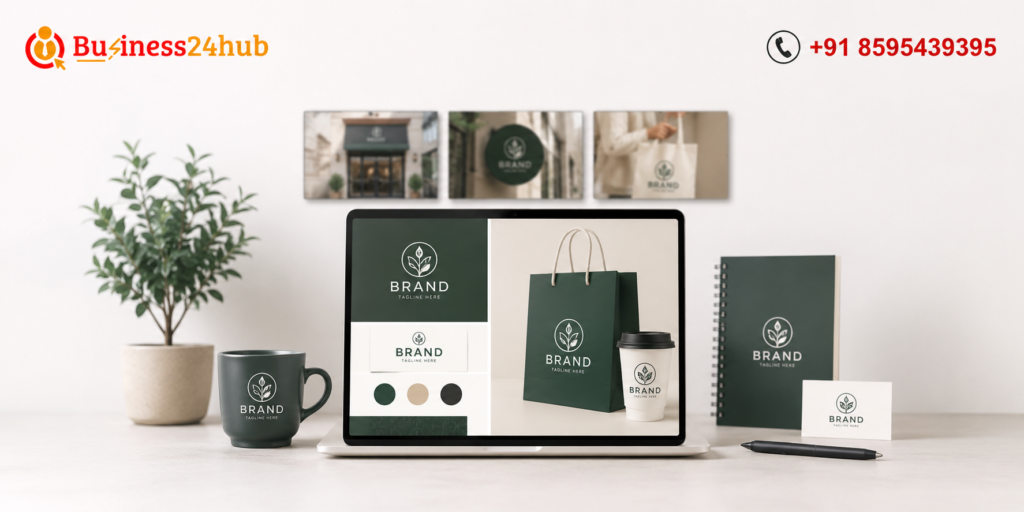
This identity is the visual, verbal, and emotional expression of who a business is. It includes the logo, color palette, typography, tone of voice, tagline, packaging, signage, and even how staff greet customers. But it goes deeper than aesthetics it’s the personality customers associate with a business the moment they see or hear about it.
Think of it as the difference between a brand’s identity (what the business puts out into the world) and its image (how customers actually perceive it). The goal of building a strong identity is to make sure these two things match as closely as possible. When a customer sees your signage, receives your packaging, or reads your social media caption, they should immediately sense the same personality every time.
For a local shop, this consistency builds something priceless: recognition without advertising spend. A well-designed identity does marketing work quietly, in the background, every single day.
Why Local Businesses Cannot Afford to Ignore This
1. Trust Is Built Faster With Consistency
People buy from businesses they trust, and trust is built through repeated, consistent experiences. If your shopfront, your invoices, your social media, and your packaging all look and feel different, customers subconsciously wonder if the business is reliable. A cohesive look signals professionalism and stability two things people look for before spending money at a new place.
2. Local Competition Is Fierce
Unlike online businesses competing globally, local businesses compete in a very small radius. There might be three coffee shops within walking distance of each other. In that environment, distinct identity is often the deciding factor. Customers pick the place that “feels right” to them, and that feeling comes from design, tone, and experience not just coffee quality.
3. Word-of-Mouth Travels Through Visuals
Local business growth heavily depends on word-of-mouth and referrals. A memorable logo or a distinctive color scheme makes it easier for customers to describe your business to friends: “the bakery with the yellow awning” or “the gym with the bold black-and-white branding.” Distinctiveness becomes shareable.
4. It Builds Community Belonging
Local businesses thrive when they feel like part of the neighborhood’s story. A thoughtful identity one that reflects local culture, values, or history makes customers feel they’re supporting something authentic rather than a generic storefront.
Core Elements of a Strong Local Identity
Logo and Visual Mark
The logo is often the first thing people notice. For local businesses, simplicity usually wins a clean, scalable design that works on a shop sign, a coffee cup, and a Instagram profile picture alike. Overly complex logos lose detail when shrunk down or printed on small items like receipts or business cards.
Color Palette
Color triggers emotion faster than words. Warm tones like orange and red evoke energy and appetite (common in restaurants), while blues and greens suggest calm and trust (common in wellness or financial services). Choosing two to three core colors and using them consistently across the storefront, website, and packaging creates instant recognizability.
Typography
Fonts carry personality. A rustic bakery might use a handwritten-style font to feel warm and homemade, while a modern salon might choose a sleek sans-serif to feel contemporary. Sticking to one or two fonts across all materials avoids a cluttered, inconsistent look.
Tone of Voice
How a business “speaks” on signage, social media, or even how staff answer the phone is part of identity too. A playful, casual tone suits a neighborhood ice cream shop; a warm, reassuring tone suits a family clinic. This tone should stay consistent whether it’s a menu description or a reply to a customer review.
Physical Experience
For local businesses, brand experience isn’t confined to a screen. Store layout, lighting, background music, staff uniforms, and even the scent of the space all contribute to how a brand feels in person. This is a major advantage local businesses have over purely digital competitors they can create a full sensory identity.
Story and Values
Customers increasingly want to know the “why” behind a business. A short, authentic story why the business started, what it stands for, how it supports the local community adds emotional depth that a logo alone cannot.
Step-by-Step: Building Brand Identity for Local Businesses
Step 1: Define Your Core Audience
Before choosing a single color, understand who you’re serving. A business identity built for young professionals will look very different from one built for retirees or families with children. Talk to existing customers, look at who actually walks through the door, and shape decisions around them.
Step 2: Clarify Your Unique Value
What makes your business different from the other three options nearby? Maybe it’s speed, personal service, authenticity, or a specialty product. This unique value should influence every design and messaging decision going forward.
Step 3: Design the Visual Foundation
Work with a designer (freelancers are often affordable) to create a logo, color palette, and typography system. Even a modest budget can produce a professional result if the brief is clear about the business’s personality and target audience.
Step 4: Apply It Everywhere Consistently
Signage, packaging, social media, invoices, uniforms, email signatures, and even the “closed” sign on the door should reflect the same colors, fonts, and tone. Consistency, not perfection, is what builds recognition over time.
Step 5: Train Your Team
Employees are walking representatives of the identity. Train staff on tone of voice, how to greet customers, and how to represent the business’s values in daily interactions this is where identity becomes lived experience rather than just a logo on a wall.
Step 6: Gather Feedback and Refine
Ask regular customers what comes to mind when they think of the business. If their answers don’t match the intended identity, it’s a sign some elements need adjustment. Identity should evolve gradually, not be reinvented every year.
Common Mistakes Local Businesses Make
- Copying competitors instead of finding a distinct voice. Blending in defeats the purpose of building an identity at all.
- Changing the logo or colors too frequently, which resets the recognition customers had built up.
- Ignoring offline touchpoints like receipts, uniforms, and signage while focusing only on social media.
- Overcomplicating the visual identity with too many colors, fonts, or design elements, making it hard to reproduce consistently.
- Not training staff, leaving a gap between the polished branding and the actual customer experience in-store.
Real-World Examples of Strong Local Identity
Consider a neighborhood bakery that uses a warm cream-and-brown color scheme, a hand-lettered logo, and packaging that says “Baked fresh every morning, just for this street.” Every element visual and verbal reinforces the same feeling: homemade, local, trustworthy.
Or picture a local fitness studio using bold black-and-white branding, motivational one-line taglines on the walls, and staff trained to greet every member by name. The identity isn’t just what’s printed it’s what’s felt the moment someone walks in.
These businesses succeed not because they spent millions on advertising, but because every touchpoint tells the same consistent story.
Measuring the Impact of Your Local Brand
While this identity feels intangible, its effects show up in measurable ways:
- Repeat customer rate consistent identity builds familiarity, which drives loyalty.
- Referral volume memorable branding makes word-of-mouth easier.
- Perceived pricing power well-branded businesses can often charge slightly more because customers associate quality with the polished experience.
- Social media engagement recognizable visuals perform better and get shared more often within local community groups.
Tracking these metrics over six to twelve months after a rebrand or identity refresh can show clear, tangible business growth tied directly to design and consistency choices.
How Digital Presence Extends Local Identity
Even the most community-rooted business today lives partly online. A Google Business Profile, an Instagram page, or a simple website is often the first place a potential customer encounters a business before ever walking through the door. This makes digital consistency just as important as the physical storefront.
The same colors, fonts, and tone used on a shop’s signage should carry over to its website and social captions. A mismatch say, playful in-store signage paired with a stiff, corporate-sounding website creates a subtle sense of confusion that erodes trust before a customer even arrives.
Local businesses also benefit from showing “behind the scenes” content: the baker at 5 a.m., the tailor measuring fabric, the barista learning a new recipe. This kind of content humanizes the identity and reminds followers that a real person, with real craft, is behind the counter.
Reviews and Reputation as Part of Identity
Online reviews have quietly become an extension of identity. How a business responds to a glowing five-star review or a frustrated one-star complaint says as much about its personality as any logo. A warm, personal reply reinforces the same values the business tries to project everywhere else, while a defensive or generic response can undo months of careful brand-building in a single comment thread.
Adapting Identity for Different Types of Local Businesses
Not every local business needs the same approach. A retail boutique, a service-based business like a plumber, and a hospitality venue like a café each lean on identity in slightly different ways.
Retail shops benefit most from strong visual merchandising window displays, packaging, and in-store layout that reflect the brand’s personality at every glance.
Service providers, such as electricians, tutors, or cleaners, often rely more heavily on tone of voice and trust signals: uniforms, branded vehicles, professional invoices, and clear, friendly communication that reassures customers before any work even begins.
Hospitality businesses, including cafés, restaurants, and salons, depend on full sensory experience music, lighting, scent, and staff warmth layered on top of visual branding to create an atmosphere customers want to return to.
Understanding which category a business falls into helps prioritize where design and messaging effort should go first, rather than spreading a limited budget too thin across every channel at once.
Building Identity on a Budget
Not every local business has thousands of dollars to invest upfront, and that’s completely fine. Start small:
- Invest first in a clean, simple logo and a defined color palette this is the foundation everything else builds on.
- Use free or low-cost design tools for social media templates once the foundation is set.
- Print consistent signage and packaging even if it’s a smaller batch initially.
- Reinvest in more polished materials (uniforms, better packaging, a refreshed storefront) as revenue grows.
Identity doesn’t need to be expensive to be effective it needs to be consistent and intentional.
Long-Term Benefits of a Well-Defined Identity
The businesses that treat identity as an ongoing investment, rather than a one-time design project, tend to see compounding returns over the years. A consistent look and feel makes it easier to open a second location, launch a new product line, or bring on new staff, because the foundation of “who we are” is already documented and understood.
It also protects a business during difficult periods. When a well-known local shop faces a supply issue, a price increase, or a temporary closure, loyal customers who feel connected to its identity are far more forgiving and far more likely to return once things stabilize. Identity, in this sense, isn’t just a growth tool it’s also a form of resilience.
Finally, a clear identity makes future marketing decisions easier. Instead of guessing what a new flyer, social post, or seasonal promotion should look like, the existing colors, tone, and values provide a ready-made framework. This saves time, reduces decision fatigue, and keeps every new piece of communication feeling like it belongs to the same business.
Conclusion
Brand Identity for Local Businesses is not a decorative afterthought it’s a core growth strategy. It’s the reason a customer chooses one bakery over another on the same street, or recommends a gym to a friend without hesitation. Building a strong, consistent identity takes intention: understanding your audience, clarifying your unique value, designing thoughtfully, and living that identity through every customer interaction.
The Business24Hub that invest early in a clear, authentic identity don’t just look better they build the kind of trust and recognition that keeps customers coming back for years, regardless of how many new competitors open down the street.
For a deeper dive into related topics, check out our internal guides on Local SEO for Small Businesses and How to Write a Marketing Plan for a Small Shop. For additional expert reading, the U.S. Small Business Administration’s guide to marketing and sales and HubSpot’s guide to developing a brand identity are excellent external resources on building a business identity that lasts.
Frequently Asked Questions (FAQs)
1. What is brand identity for a local business?
Brand identity is the visual and emotional representation of your business, including your logo, colors, typography, messaging, and overall style. It helps local customers recognize and remember your business.
2. Why is brand identity important for local businesses?
A strong brand identity builds trust, increases customer recognition, and helps your business stand out from local competitors. It also creates a professional image that attracts more customers.
3. What elements are included in a brand identity?
A complete brand identity typically includes a logo, color palette, typography, business cards, social media graphics, website design, packaging, and brand guidelines to maintain consistency across all platforms.
4. How can a strong brand identity help increase local sales?
A consistent and professional brand identity improves customer confidence, encourages repeat business, and makes your business more memorable, which can lead to higher conversions and increased local sales.
5. How much does brand identity design cost for a local business?
The cost depends on the scope of the project. Basic branding packages are more affordable, while complete brand identity solutions—including logo design, brand guidelines, stationery, and digital assets—may cost more based on your requirements.
6. How long does it take to create a brand identity?
A professional brand identity usually takes 1 to 3 weeks, depending on the complexity of the project, revisions, and the number of branding materials required.
Get Expert Advice Website Development
🟡Legaltax provides complete IT, web development, software development, digital marketing, branding, SEO, mobile app development, and business consulting services to startups, entrepreneurs, SMEs, and enterprises across India.
🟡For other Legal and Trademark related services Visit
👉 Money Recovery Cases
👉 Property Disputes
👉 Business & Licence Registrations
🟡 Protect Your Rights
👉 Domestic Violence Legal Support
👉 Stridhan Recovery
👉 Mutual Consent Divorce
👉 Contested Divorce Filing
👉 Child Custody and Maintenance
👉 Matrimonial Property Settlement
👉 NRI Divorce Services
👉 Alimony and Maintenance
📞 Call Now: +918595439395
🕐 Free Consultation: Monday to Saturday, 10 AM to 6 PM

I’m Aryan Yadav, passionate about SEO and Digital Marketing with a strong interest in helping businesses grow online. I enjoy learning new strategies, exploring digital trends, and creating ideas that deliver value. I believe in continuous growth, creativity, and building meaningful results through smart work and dedication.

